




As someone who has played football, I’d sprint across the field, dribbling the ball between my feet, always aware of an opponent hot on my heels.
Drill sessions were always intense and fast-paced, pushing the team to its limits. We’d spend hours training, working on everything from passing accuracy to routines. Our coaches would yell instructions, and we’d scramble to move the ball from one end of the field to the other.
Football is always physical, but we rarely talk about its mental side.
Things like strategy, spatial awareness, reaction time, and the ability to shift attention were just as crucial. Yet, we were focused on conditioning our bodies, not our minds.
 The best games for the brain help us train the most important organ of our body.
The importance of training the brain, even as an adult
Cognitive skills naturally decline with age, and thinking and memory will be more challenging, so building up your reserve is crucial.
The brain can still learn and grow, even as it ages, but it’s only achievable when trained regularly, as reported by Harvard Health Publishing.
Exercising the brain maintains its cognitive health, promotes personal growth, strengthens neural pathways, and builds new ones. This has to do with neuroplasticity, which makes the brain incredibly adaptable through learning, allowing it to form new connections and rewiring existing ones throughout life.
This Reddit user puts it perfectly, “Think about your brain as a field of grass. The more you walk over a pathway, the more you can see the path in the grass. Eventually, you have a clearly defined trail. That’s learning. The more you practice a skill, the deeper the rut your brain makes. Games can help improve cognitive skills if designed well enough.”
“You need to look at what the game makes your brain do,” they continue. “If the game is having you memorise images, that’s a separate cognitive skill from memorising a string of numbers. Transfiguring the numbers to remember them backwards is another part of the brain. Memorising numbers and decoding a pattern to guess the next number is a different part of the brain again.”
Brain exercises go beyond cognitive skills too.
Frequent mental challenges contribute to emotional well-being, promote higher life satisfaction, and help people remain adaptable in an ever-changing world.
Ongoing brain training is useful in personal life and crucial for professional development. Keeping the mind active enhances problem-solving abilities and creativity, both key to thriving in modern work environments.
However, there may be consequences for those who don’t.
 Frustration, boredom, and depression are often the results of a lack of mental activity.
What happens when you don’t train your brain?
Regular brain exercise helps resist age-related cognitive stagnation and slow cognitive decline. It can even delay the onset of conditions like dementia.
Without mental stimulation, the brain’s capacity to form new connections diminishes over time, making it harder to learn new things or adapt to changing circumstances. This can lead to slower reaction times, reduced concentration, and increased boredom or frustration.
The good news is that keeping your brain sharp can be fun.
To help you get started, we’ve compiled a list of fun and engaging brain games that can challenge your mind and keep your cognitive skills sharp.
But one word of advice: these games aren’t your alternative to doomscrolling or a way to slack on your studies — there’s no point in knowing how to be the fastest at the Rubix cube if you don’t know basic math, is there?
 Chessboxing is a hybrid sport that combines two traditional disciplines: where two opponents play alternating rounds of chess and boxing until one wins by checkmate or knockout.
5 board games for the brain to improve your mind
1. Chess
Amazon / Apple Store / Google Play Store
Widely regarded as one of the best brain-development games, chess promotes strategic thinking by requiring players to plan several moves, anticipate opponents’ actions, and adapt their strategy.
This constant mental juggling improves critical thinking, enhances overall cognitive function, strengthens memory, improves concentration, and fine-tunes logical reasoning skills. Additionally, the game is known for stimulating creativity, such as thinking outside the box when coming up with moves or unexpected strategies.
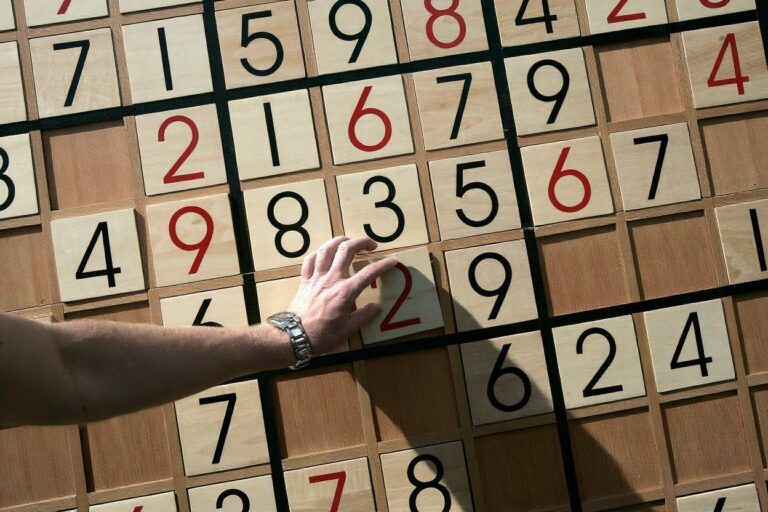
2. Sudoku
Amazon / Apple Store / Google Play Store
Suppose you want to enhance your logical thinking and problem-solving abilities. While it’s technically not a board game, this Japanese-born game is not as easy as it looks as it demands focus and thinking about the bigger picture, but this should not put you off from mastering it.
Players work to fill in the grid with the correct numbers, relying primarily on logical deduction, which strengthens the brain’s ability to process information systematically. Sudoku also requires you to keep track of numbers and patterns, boosting memory and cognitive recall, making it a great mental exercise for staying attentive and alert.
 You can often find crossword puzzles in the comic section of a newspaper.
3. Crosswords
Amazon / Apple Store / Google Play Store
First invented by British journalist Arthur Wynne, crosswords or” word-cross” are excellent for brain training, particularly in language and memory. Recalling and connecting words to solve the puzzle stimulates memory, keeping the brain sharp and active, making this one of the best games for the brain.
Additionally, solving crossword puzzles involves finding the right words to fit the given clues, which naturally expands vocabulary and improves language comprehension. Breaking down clues into more straightforward understandings will help enhance problem-solving skills, making crosswords an engaging way to strengthen the mind.
You can find daily crossword puzzles on news websites such as The New York Times, the Washington Post, USA Today, and The Guardian, just like how you would find them in the comics section of newspapers.
4. Scrabble
Amazon / Apple Store / Google Play Store
This family-friendly game is a fun word game and a powerful tool for boosting vocabulary and language abilities. Scrabble challenges the brain to think creatively under time pressure, making it an excellent exercise for mental flexibility and cognitive agility.
As players work to form high-scoring words on the board, they expand their vocabulary and improve their spelling. The game also requires quick thinking and adaptability as players must develop words based on the available tiles and opportunities on the board.
5. Catan
Amazon / Apple Store / Google Play Store
Formerly known as “The Settlers of Catan,” Catan is a strategy game and one of the best games for the brain that requires players to learn how to negotiate, manage resources, and plan for the long term. This enhances social skills, making it not only mentally stimulating but a great tool for building interpersonal communication and teamwork as well.
As players build settlements, trade resources, and strategies for territorial control, they engage multiple cognitive functions simultaneously. Catan sharpens decision-making skills and encourages creative thinking, as there are various strategies for winning.
 Like all things competitive, there’s even a Tetris World Championship where Tetris lovers put their skills to the test.
5 mobile games for the brain to improve your cognitive skills
1. Tetris
Apple Store / Google Play Store
Tetris enhances spatial awareness by requiring players to rotate and fit different shapes into a grid. This constant engagement with shapes and spaces strengthens the brain’s ability to recognise patterns and visualise spatial arrangements.
As the game progresses and the speed increases, players must think and react quickly, which improves cognitive flexibility and mental agility. The fast-paced nature of Tetris also helps sharpen focus and concentration, training the brain to process visual information quickly and efficiently.
2. Lumosity
Apple Store / Google Play Store
Lumosity is a scientific brain training app that offers a variety of games designed to target and improve different cognitive functions. Whether it’s memory, attention, problem-solving, or processing speed, the app provides mental exercises that help users strengthen these critical brain skills as the games encourage the brain to switch between tasks and adapt to new scenarios.
With its personalised training programmes, Lumosity adjusts the difficulty based on the user’s performance, ensuring the users are constantly challenged and making progress.
3. Elevate
Apple Store / Google Play store
Elevate is a personal brain-training app that improves communication skills, including reading comprehension, writing, and speaking. The app also offers games for the brain that enhance mental math abilities and critical thinking, making it a comprehensive tool for brain development.
By regularly engaging in personalised exercises, players can sharpen their problem-solving skills and analytical thinking. Elevate further strengthens memory and thought-processing speed by providing fast-paced exercises that challenge the brain to retain and manipulate information efficiently, making users move quicker and more effective thinkers.
 Think the best games for the brain are boring. Try competing with family and friends on Wordle.
4. Wordle
Apple Store / Google Play Store
Developed by Welsh software engineer Josh Wardle, Wordle is a popular web-based word game in which players have six attempts to guess a five-letter word. Feedback is given for each guess using coloured tiles indicating when letters match or occupy the correct position.
Wordle helps improve vocabulary and word recall, enhances logical reasoning, and promotes cognitive focus with its limited number of guesses. The process encourages pattern recognition, as players must deduce the word’s structure based on letter placement and frequency. Playing this game daily will improve decision-making skills and sharpen the brain’s ability to solve language-based problems.
5. 2048
Apple Store / Google Play Store
First published on GitHub, 2048 is a number puzzle game that helps develop strategic thinking as players merge tiles to create more significant numbers. The game encourages forward-thinking and planning since each move can significantly impact the board’s future layout.
Thinking critically to avoid losing the game boosts problem-solving skills and analytical thinking. It also improves working memory, as players must remember the positions and values of the tiles while planning their next steps.