


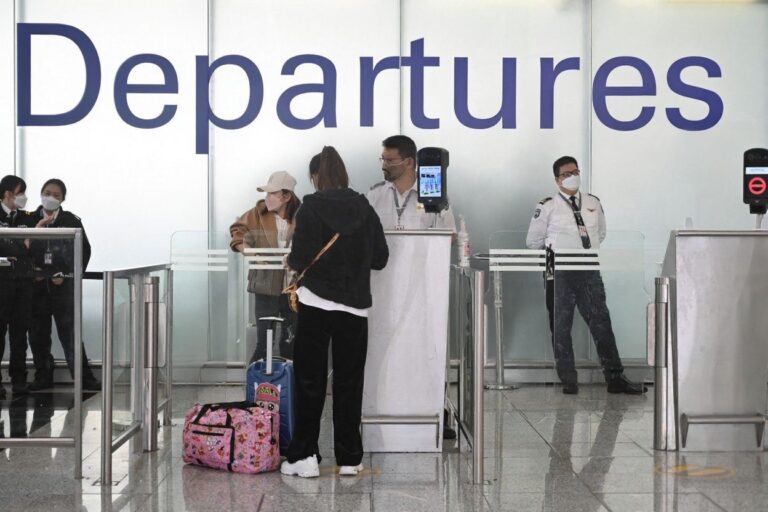


Despite securing acceptance letters from institutions in top study destinations, many would-be international students have their dreams dashed at the next stage — failing to obtain visas.
Take Canada, for example — 62% of study permit applications were refused in 2025, which is the highest it has been in 10 years. The rejection rate is even higher for Indian international students, reaching almost 80%
Not only does this issue lead to a myriad of planning issues for the parties involved, but the rapidly climbing student visa fees are a hefty setback, too — like that 125% increase for Australia.
Meanwhile, in the US, enrollment fell 17%, which is the largest drop in a decade (aside from during the COVID-19 pandemic). Even more students are hesitating to apply to the US for higher education, as the Trump administration has made it more difficult to obtain student visas.
Australia tightens student visa checks
Australia has tightened its student visa rules for applicants from several South Asian countries. Countries like India, Nepal, Bangladesh, and Bhutan have been reclassified into the highest-risk category (Evidence Level 3) under its Simplified Student Visa Framework (SSVF).
This shift, which took effect on January 8, 2026, means that visa applications from these countries are now subject to much stricter scrutiny than before, with authorities demanding more extensive documentation, such as:
- verified bank statements
- authenticated academic transcripts
- proof of financial capacity
- stronger evidence of English proficiency
- clearer justification of genuine study intentions
Australian officials say the change is aimed at tackling “emerging integrity issues,” including concerns around fraudulent documents, non-genuine enrollments, and misuse of the student visa system.
For prospective students from these countries, the visa process is likely to become longer, more costly, and more complex, increasing the chances of delays or refusals.
So the question is: how do you navigate this tricky landscape to fulfil your study abroad dreams?
If you’re determined to earn your degree from one of the more popular destinations, here’s all you need to know about your student visa, fees and everything included.
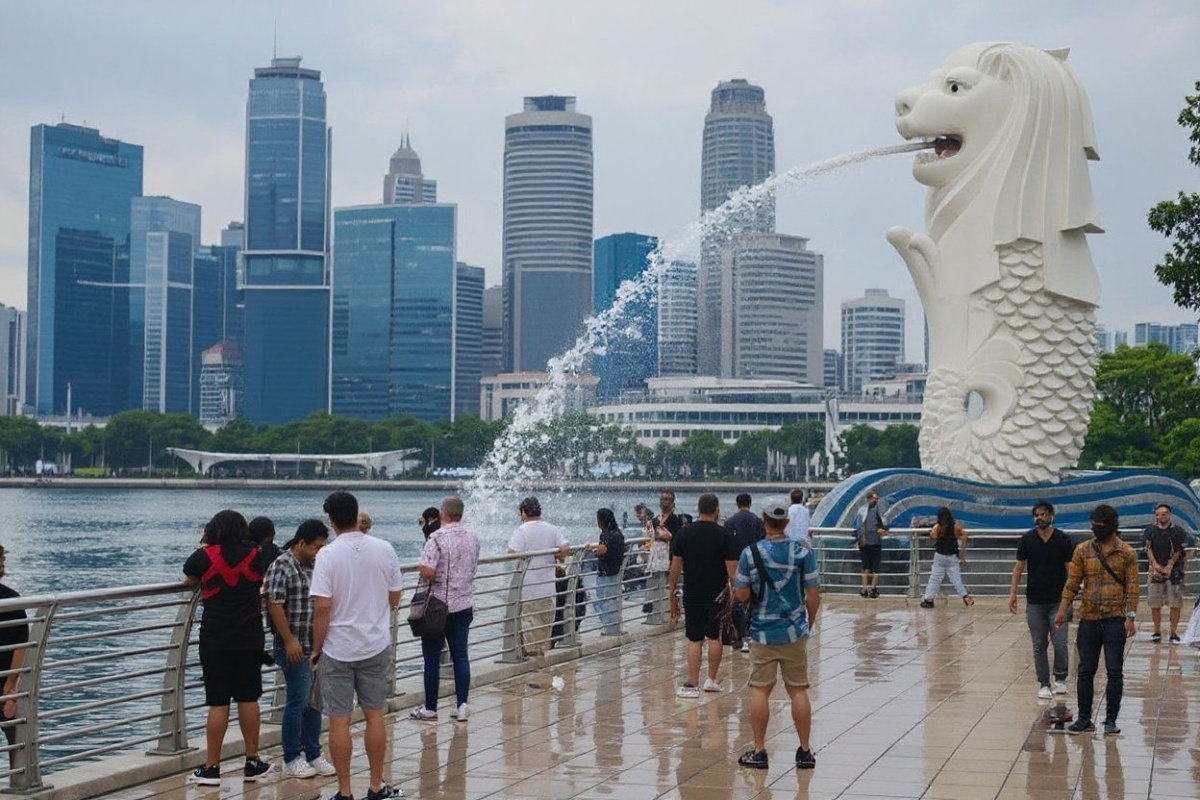
If you study in Singapore, you’ll soon be familiar with the country’s official mascot — the Merlion, a mythical creature with the head of a lion and the body of a fish.
The student visa fees of the most popular study abroad destinations
Ranked from lowest to highest.
Singapore
Obtaining a Student Pass is essential if you wish to enrol in a programme that exceeds 30 days.
This pass has variations based on the programme’s duration and type. For shorter programmes, lasting up to three months, you can apply for a short-term pass, while a long-term pass is required for bachelor’s or master’s degrees.
Applications are made through the Student’s Pass Online Application and Registration (SOLAR) system, managed by the Singapore Immigration and Checkpoints Authority (ICA).
To get started, secure your admission letter from your chosen Institutes of Higher Learning (IHL) and ensure it’s registered with SOLAR. The IHL will provide your details to the system, along with a reference number for your application.
Typically, applications are processed swiftly, often within 15 days to a month, provided all requirements are met.
Key facts about student visa fees in Singapore:
*1 Singaporean dollar is equal to US$0.78 at the time of writing.
- Visa Processing Fee: SGD$30 (US$23.30)
- Visa Issuance Fee: SGD$60 (US$46.59) for each student pass issued in your name.

Hong Kong will be raising the non-local student cap at public universities to 50%, from 40%, for the 2026-2027 academic year.
Hong Kong
After receiving an acceptance letter from a Hong Kong educational institution, non-local students must secure a student visa or entry permit. This applies to everyone, whether you’re in an exchange programme or pursuing full-time studies.
There are several options for submitting your application forms and supporting documents. You can choose to send them by post directly to the Hong Kong Immigration Department or through a local sponsor.
Alternatively, applicants residing abroad may submit their applications in person at the nearest Chinese diplomatic or consular mission, provided they include all relevant supporting documents and valid travel documentation.
Students enrolled in full-time, locally accredited programmes usually receive a stay that matches their study duration. Those in shorter programmes are typically granted a stay of 12 months upon entry or for the length of their studies, whichever is shorter.
The visa application process usually takes about six to eight weeks.
Key facts about student visa fees in Hong Kong:
*1 Hong Kong dollar is equal to US$0.13 at the time of writing.
- Student Visa: HKD$230 (US$29.49)

As of September 1, 2025, international students in Canada will need to show an additional CAD$2,260 to be eligible for a study permit.
Canada
If you’re still keen on heading over to Canada for higher education, consider applying for a Canadian study permit. It’s different from a visa, and its requirements depend on the length of your intended study period.
If your studies are for six months or less, a visitor visa is typically sufficient, and a study permit is not required. However, for longer study durations, both a visitor visa and a study permit are necessary.
The study permit is a document that allows foreign nationals to study at designated learning institutions (DLIs) in Canada.
Generally, you must apply for a study permit before arriving in Canada, though there are some cases where you can apply from within the country or at the port of entry upon arrival.
It can take up to three months to receive your study permit, so it’s advisable to apply as soon as you receive your letter of acceptance.
Key facts about student visa fees in Canada:
*1 Canadian dollar is equal to US$0.70 at the time of writing.
- Study permit per person (including extensions): CA$150 (US$104.40)
- Restore your status and get a new study permit: CA$379 (US$263.79)

Graduate international student enrolment dropped 5.9% in 2025 after the Trump administration clamped down on immigration. Source: Pexels
US
In the US, the type of student visa you need depends on your programme of study and the institution you plan to attend. There are now two visa categories: F and M.
- The F visa is for students pursuing academic programmes.
- The M visa applies to those enrolled in vocational studies.
Getting your US visa can take anywhere from a week to a few months — it all depends on your specific situation.
For most students, the application process is pretty quick, taking just a few days, and then you’ll need to wait a couple of extra days to get your passport back.
To start the process, you must first apply to a Student and Exchange Visitor Programme (SEVP)-approved school. Once accepted, the school will enrol you in the Student and Exchange Visitor Information System (SEVIS), and you will need to pay the SEVIS I-901 fee. The school will then issue you a Form I-20, which is required for your visa application and interview.
Be sure to bring the Form I-20 to your visa interview at a US Embassy or Consulate.
Key facts about student visa fees in the US:
- Visa application: US$185

Those who study in China will often be able to pick up one of the most spoken languages in the world — Mandarin.
China
The Chinese student visa system is divided into two categories: X1 and X2.
The X1 visa is intended for students enrolling in programmes longer than six months, while the X2 visa accommodates those in shorter programmes lasting less than six months.
Notably, the X2 visa permits only a single entry, whereas the X1 visa allows multiple entries and can be valid for up to five years.
For applicants seeking an X1 visa, the JW202 form — a letter of acceptance from a recognised educational institution in China — is mandatory. This form must be accurate and correspond with the applicant’s passport details.
An official invitation letter from the host organisation is also required, specifying the requested number of entries and matching the applicant’s name on their passport.
To complete the visa application, students should fill out the application form online, print it single-sided, and sign it in blue or black ink.
Additionally, applicants must include a Health Declaration Form, proof of travel arrangements, and a completed “Where You Stay” form in their application kit.
Key facts about student visa fees in China:
- Standard fees
- Consular fee: US$140
- Service fee: US$185
- Processing time: 8 business days
- Expedited fees
-
- Consular fee: US$140
- Service fee: US$235
- Processing time: 4 business days
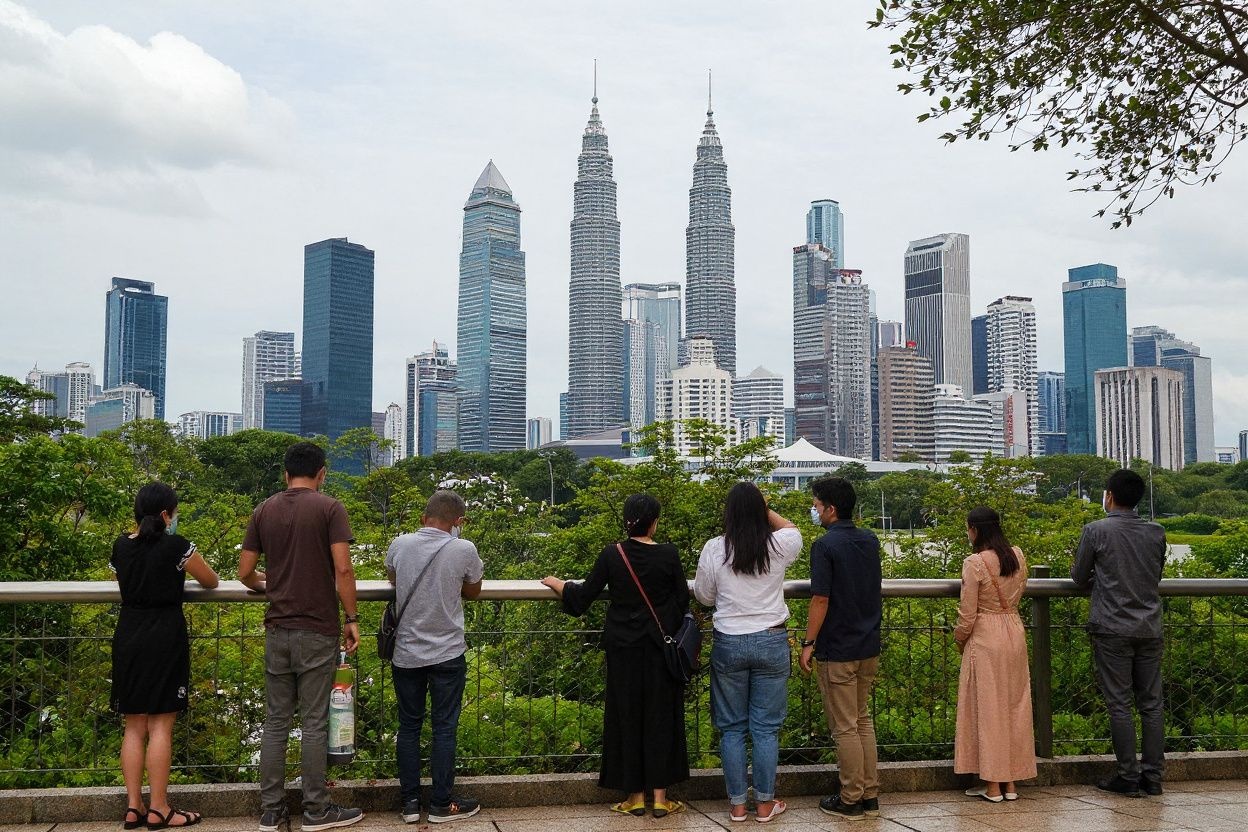
Between its low living costs and affordable tuition fees, Malaysia is a prime destination for international students wanting to experience a new country for their studies.
Malaysia
For international students aspiring to study in Malaysia, obtaining a Student Pass is an essential step in the application process.
This pass is a requirement for all foreigners seeking enrollment in various educational institutions, including government and private schools, as well as public and private higher education institutions, language centres, and training centres under the Department of Skill Development.
For those coming from abroad, your educational institution will handle the Student Pass application for you. Once you’ve secured the necessary approvals, you can head to the nearest Malaysian Embassy, High Commission, or Consulate to obtain your visa. Just remember to bring your offer letter with you.
If you’re already in Malaysia, you can submit your application directly to your institution.
After approval, you’ll receive a JP Visa for free, but keep in mind that fees apply for the Student Pass and any Multiple Entry Visas. Make sure you have a support letter from the Ministry of Education or the Department of Skill Development, your offer letter, and two sets of specific forms, along with your passport copies, ready to go.
However, students from India, Bangladesh, and Pakistan must apply directly at the Department of Immigration Headquarters in Putrajaya.
Expect the processing time for a Malaysian Student Visa to be between one to three weeks. The Visa office usually takes about 14 days to approve the Visa Approval Letter and verify applicants’ documents.
Key facts about student visa fees in Malaysia:
*1 Malaysian Ringgit is equal to US$0.25 at the time of writing.
- Private higher institutes: MYR$1,060 to MYR$1,560 (US$261.21 to US$384.43)
- Private institutes: MYR$810 to MYR$1,060 (US$186.19 to US$261.21)
- International-accredited centres: MYR$810 to MYR$1,060 (US$199.61 to US$261.21)
- Public institutes: MYR$810 to MYR$1,560 (US$199.61 to US$384.43)

New Zealand offers a fee-paying student visa for international students who fund their studies themselves, through family support, scholarships, or loans.
New Zealand
New Zealand offers several pathways tailored to different needs, from full-time academic programmes to short-term visits.
The Fee Paying Student Visa allows you to study full-time in the programme specified on your visa, covering schools, tertiary education, and English language programmes. This visa grants a stay of up to four years, with 80% of applications processed within six weeks.
For those seeking more flexibility, the Pathway Student Visa permits studying up to three consecutive programmes under one visa.
In addition to full-time studies, holders of this visa can work part-time (up to 20 hours weekly) and full-time during holidays, depending on the programme. You can stay up to five years, with 80% of applications processed within six weeks.
Once you have identified the appropriate visa, the next step is to begin the application process. Check the visa requirements, gather the necessary documents, and submit your application online or via paper.
Key facts about student visa fees in New Zealand:
*1 New Zealand dollar is equal to US$0.58 at the time of writing.
- Fee Paying Student Visa: NZD$750 (US$431.73)
- Pathway Student Visa: NZD$750 (US$431.73)
- Visitor Visa: NZD$341 (US$16.29)
The number of applications for UK student visas increased by seven per cent in the year ending September 2025.
UK
For most international students in the UK, obtaining a student visa is essential. There are three main types of student visas available:
- If you are 16 or older and your programme lasts longer than six months, you’ll need to apply for the Student Route visa.
- The Short-term Student visa is available for English language courses lasting between six and 11 months.
- For minors aged four to 17, a Child Student visa is required. This visa also requires parental consent and proof of sufficient financial resources to support your stay.
The visa application process begins with securing an unconditional offer from a licensed student sponsor. Once accepted, your university will issue a Certificate of Acceptance for Studies (CAS).
If you’re applying from outside the UK, the earliest you can submit your visa application is six months before your programme starts, with decisions usually made within three weeks.
If applying from inside the UK, you can apply up to three months before your programme begins, but your new programme must start within 28 days of your current visa expiring.
Key facts about student visa fees in the UK:
*1 pound is equal to US$1.34 at the time of writing.
- To apply for a Student visa from outside the UK: 490 pounds (US$655.88)
- To extend or switch to a Student visa from inside the UK: 490 pounds (US$655.88)
Australia has tightened its student visa checks for India, Nepal, Bangladesh, and Bhutan, categorising them as high-risk.
Australia
Australia’s Student visa (subclass 500) is the go-to for most international students. With it, you can study in Australia, travel in and out of the country, and even work part-time (48 hours every fortnight) while your programme is in session.
But that’s not your only option.
The Training visa (subclass 407) gives you a chance to gain real-world experience through workplace-based training. Whether you want to upskill in your profession or boost your academic knowledge, this visa has you covered.
Once you’ve been accepted into your chosen programme, your institution will provide a Letter of Offer. After you accept and pay the required deposit, your school will send a Confirmation of Enrolment (CoE). This document is key — without it, your visa application, which takes 53 days to be processed, can’t move forward.
On top of that, you’ll need to show that you’ve got enough funds to support yourself. As of March 2025, the current minimum financial requirement is 29,710 Australian dollars (US$19,723.28)
And don’t forget your health insurance — the Overseas Student Health Cover (OSHC) is mandatory and will keep you covered for any medical needs during your time in Australia.
Key facts about student visa fees in Australia:
*1 Australian dollar is equal to US$0.67 at the time of writing.
- Student visa (subclass 500): Starts at AU$1,600 (US$1,072.30 for the main applicant
- Training visa (subclass 407): Starts at AU$415 (US$278.13)
Denmark
If you’re a non-EU/EEA student planning to study in Denmark, there are two types of visas available.
A Schengen visa only allows stays of up to 90 days within a 180-day period and does not permit work, making it suitable only if you are completing a short course or a semester abroad.
If you are staying in Denmark for more than 90 days, you must apply for a residence permit.
This long-term permit lets you live in Denmark for the duration of your programme and allows you to work part-time.
Applications are submitted through Ny i Danmark (the official Danish immigration portal) or via VFS Global in certain countries.
To qualify, you’ll need an acceptance letter from a Danish university, proof of sufficient funds (about 1,000 euros per month), a valid passport, and health insurance.
You may also need to provide proof of English proficiency, such as an IELTS or TOEFL score.
Comprehensive health insurance is required for stays under six months, but if you are staying longer than six months, you will be covered by Denmark’s public healthcare system.
Key facts about student visa fees in Denmark:
*1 Danish krone is equal to US$0.16 at the time of writing.
- The international student visa application fee for Denmark is around 7,570 Danish kroner (US$1,174.96)
View this post on Instagram
Germany
To study in Germany for more than 90 days, international students must obtain a German national visa for study purposes, which can later be converted into a residence permit.
This visa allows legal entry, enrolment, and part-time work—typically up to 120 full days or 240 half days per year.
You’ll need an admission letter from a German institution, evidence of sufficient funds in a blocked account (around 11,904 euros per year) to cover one year of living expenses, health insurance, proof of language proficiency (German or English), and a valid passport.
Key facts about student visa fees in Germany:
*1 euro is equal to US$1.16 at the time of writing.
- The standard fee for a German student visa application is around 75 euros (US$86.94).
View this post on Instagram
Finland
In Finland, non-EU/EEA international students planning to stay longer than 90 days must apply for a residence permit for studies through the Enter Finland online portal.
This permit allows you to live in Finland while you study and work part-time.
You must submit an acceptance letter from a Finnish university, proof of sufficient funds (at least 800 euros per month), mandatory health insurance, and a valid passport.
After applying online, you must complete an identity check in person at a Finnish embassy, consulate, or service point.
Key facts about student visa fees in Finland:
*1 euro is equal to US$1.16 at the time of writing.
- The residence permit application fee for students in Finland is around 600 euros to 750 euros (US$695.89 to US$869.86), which you pay when submitting your online application.
Disclaimer: This article was last updated on March 4, 2026.
Popular stories
‘AI is like surfing’: A female leader’s 3 key advice to make it in a trillion-dollar industry

Join the future of agriculture at the University of Georgia

University of Chester: Empowering the next generation of health professionals

How to find a roommate abroad: 3 red flags you seriously don’t want to ignore